
Cold, Snow, Much Ice: So Stay Cozy, Wait To Mosey
Ah winter. Cozy up to the woodstove, burrow under the quilts, stir up some stew, listen to the wind howl out there. Shovel, chop, clean, clear, slip, slide, salt and sand your way to the shed or barn and back again. Birds hunt dormant insects, berries or seed while the earth rests and renews. Like when viewing a field of fresh snow – it’s all up to you what tracks to leave behind. Embrace the season, wear layers and get outside.
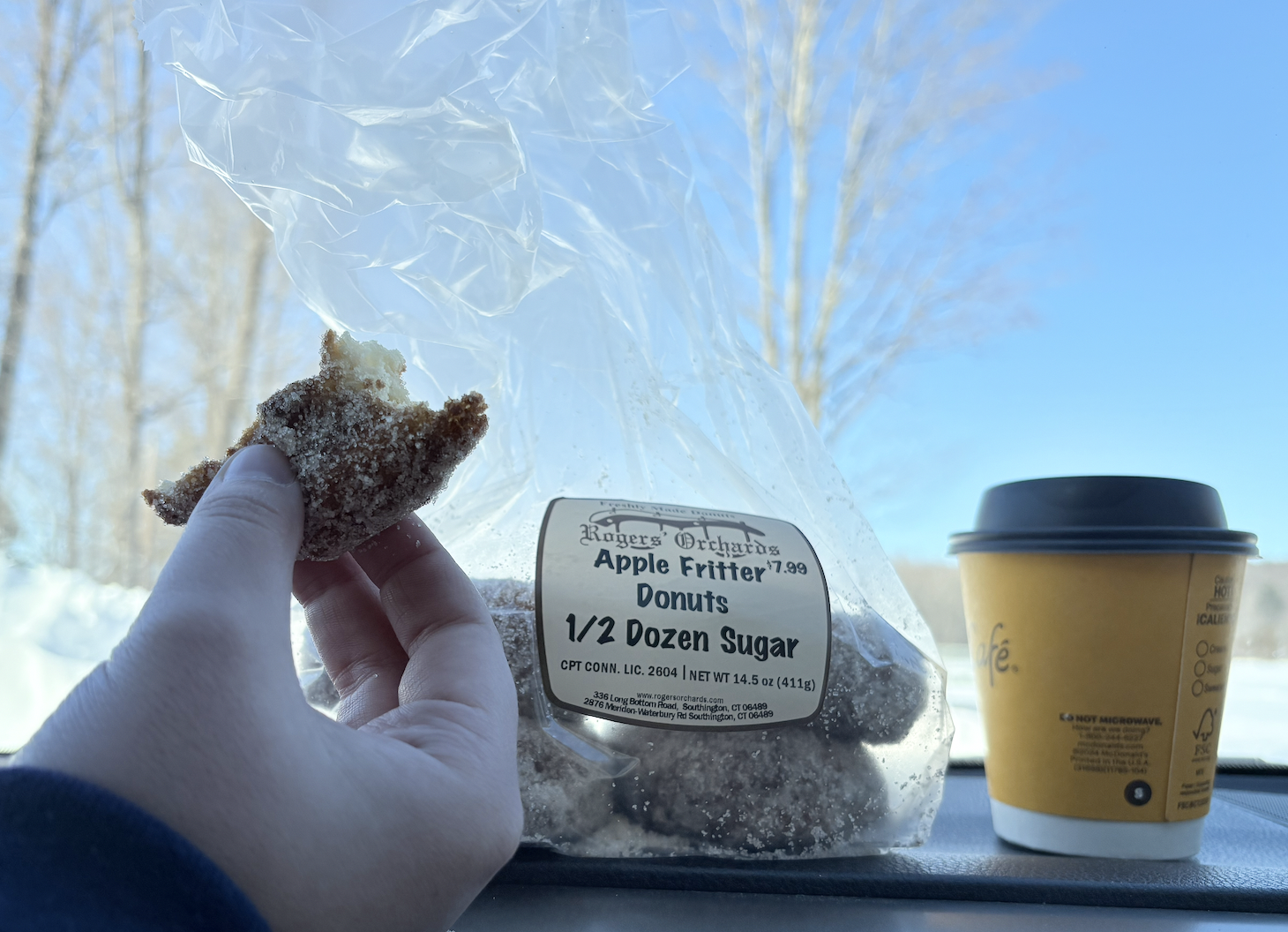
Apple fritter donut from Rogers Orchards in Southington. Oh my, are these good. Hot black coffee, perfect.
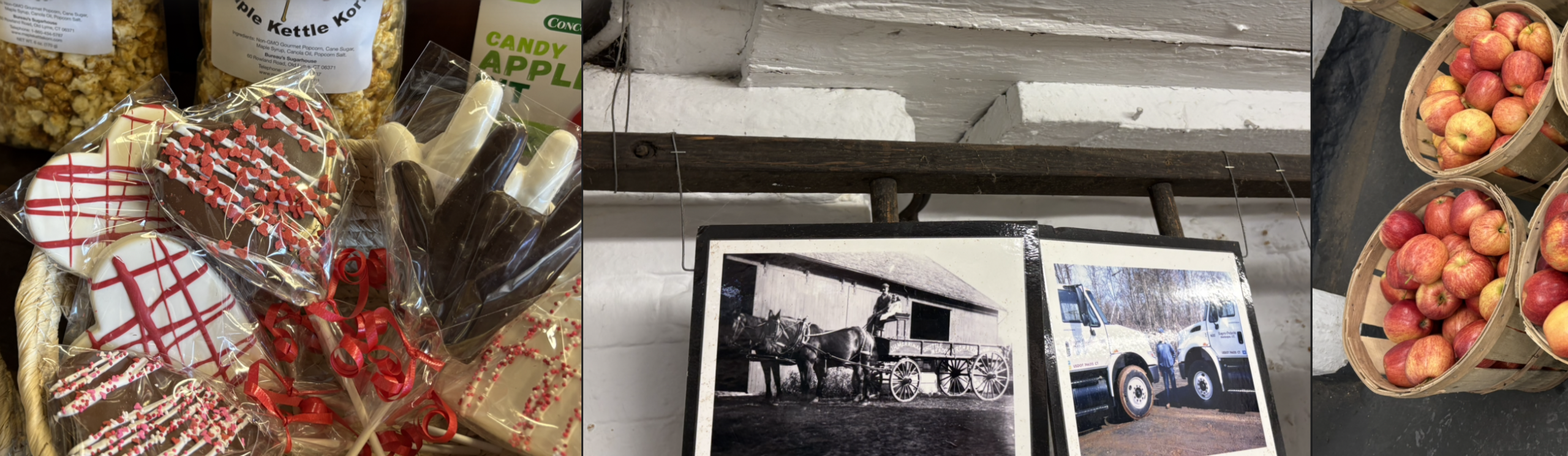
History in images can be seen inside Rogers Orchards.
Seen in Southington, CT, showshoeing in deep snow. Powered up by Rogers Orchards apple fritter (with bits of apple!) donuts. Bakery and apples, fruit and produce, cider, yogurt. More. Yes, it’s open and yes, they do ship apples, too.
Snowshoeing.
— Moo Dog Press (@moodogpress.com) January 31, 2026 at 2:22 PM
Ice was once treasured as a commodity and harvested to store food in warmer months. Blocks and blocks were quarried from ponds and lakes.
North to Maine.
Thompson Ice House Museum Annual Ice Harvest, Sunday, Feb. 15, 2026, 10 a.m. to 3 p.m.
In the small Maine village of South Bristol, a hardy group of volunteers gather each year to harvest naturally frozen ice, in much the same way it has been done since 1826. The annual Ice Harvest brings people from all over the local area and far beyond, to watch the harvest and participate in an historical reenactment of ice harvesting.
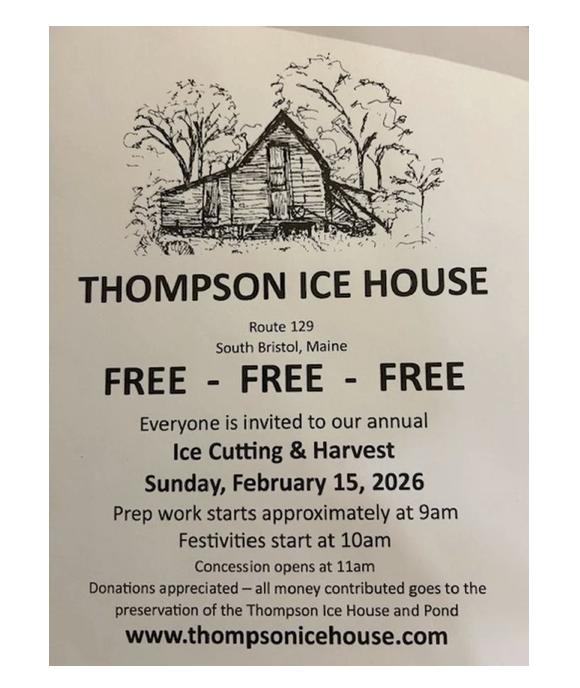
The Thompson Ice House Museum’s mission is historical preservation, education and community engagement, and 2026 is the 200th year since Asa Thompson created the ice pond and started harvesting ice for his farm.
How it’s done in New Hampshire, from this year:
And 2025:
Tired of the monochrome winter landscape? Drink in the color-drenched growing displays at the upcoming CT Flower & Garden Show in Hartford, Thursday, Feb. 19 through Sunday, Feb. 22 at the Connecticut Convention Center. Fee is $17 (advance discount tickets online), $20.80 ($20 if using cash), $5.28 ages 5-12 ($5 if using cash); free for children younger than 5.
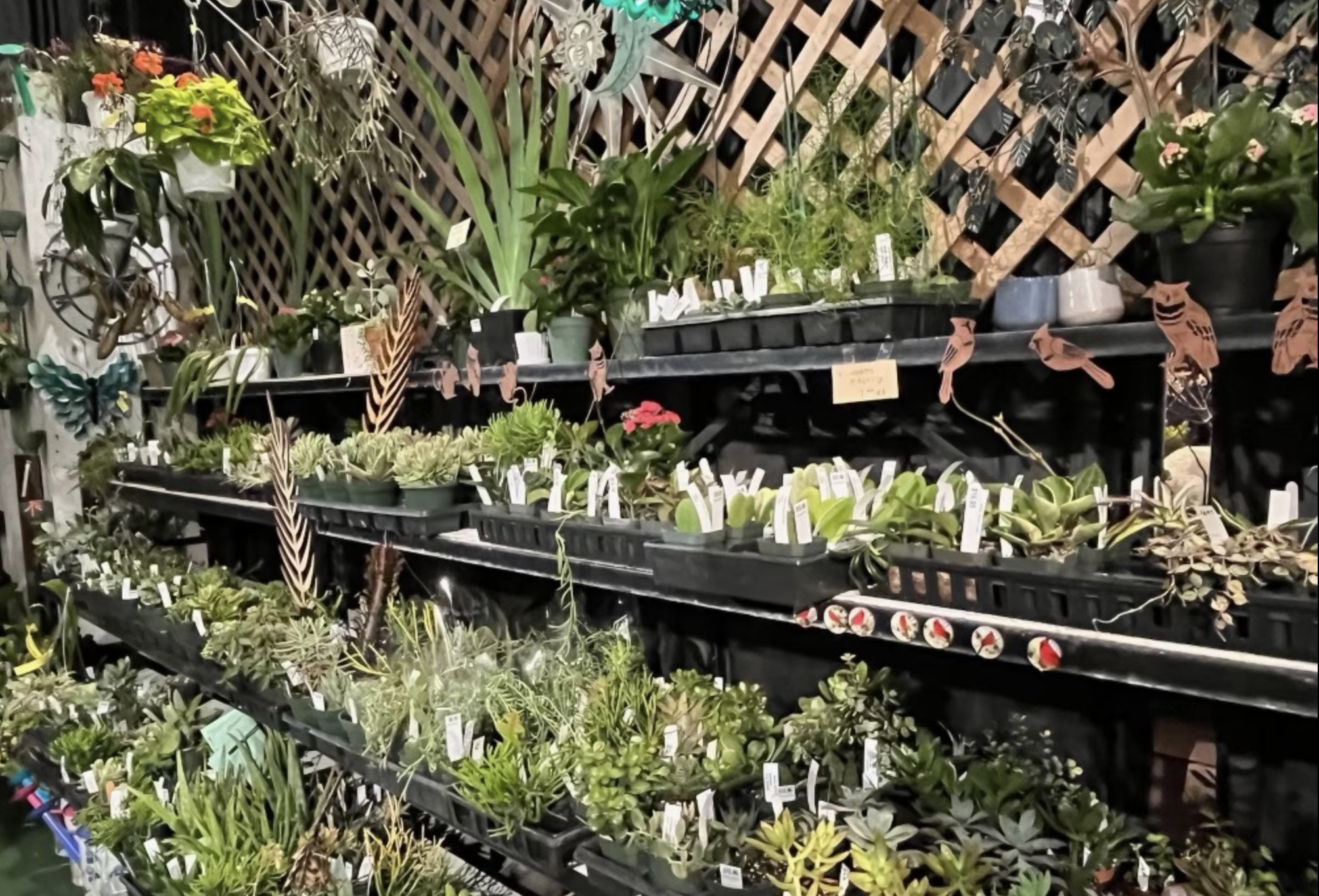
Tropicals, houseplants. New England’s ONLY 2026 major flower exhibition & show: Thursday, Feb. 19 – Sunday, Feb. 22, 2026, Connecticut Convention Center in Hartford. Image from event linked to official FB page.
All it took was meeting a greenbroke mare for a bareback ride through piney woods and open fields, and oh yes, I was hooked for life on the scent of horse sweat and leather, sweet breath plus learning about feed and hay. If fear is holding you back from life with horses, there are people who will help you get closer.
Warm up to equines with others who want to share their passion for these marvelous creatures.
A fun event is CT Horse Symposium, Saturday, March 7, University of Connecticut, Storrs.
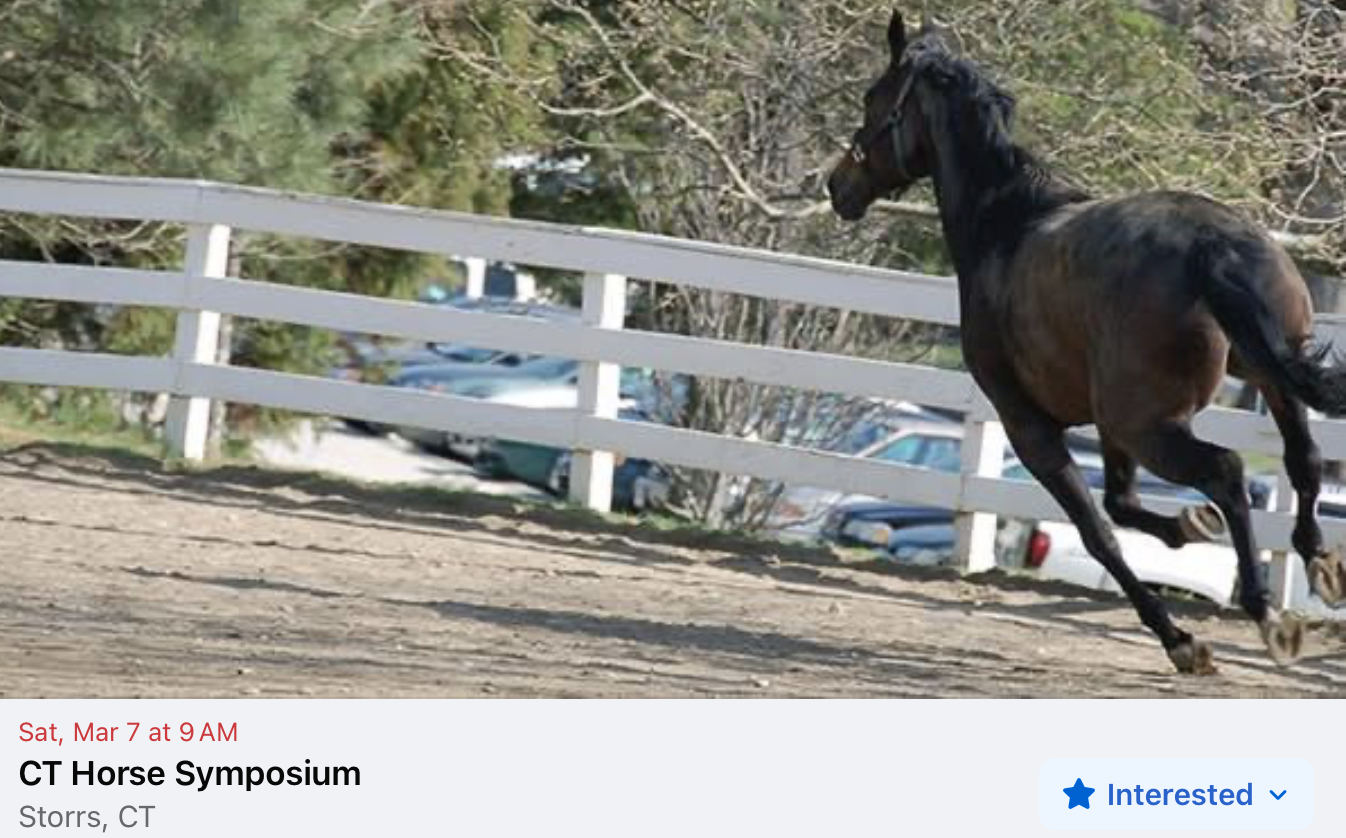
On the calendar.
Spectators please park in the paved lot to the right of the arena. Horse trailers only in the dirt lot to the left of the arena.
Pay at the door (cash or check payable to UConn ONLY) or online.
If there are any questions, contact Jenifer Nadeau at (860) 486-4471 or email jenifer.nadeau@uconn.edu. For complete details see https://animalscience.cahnr.uconn.edu/horsesymposium/.
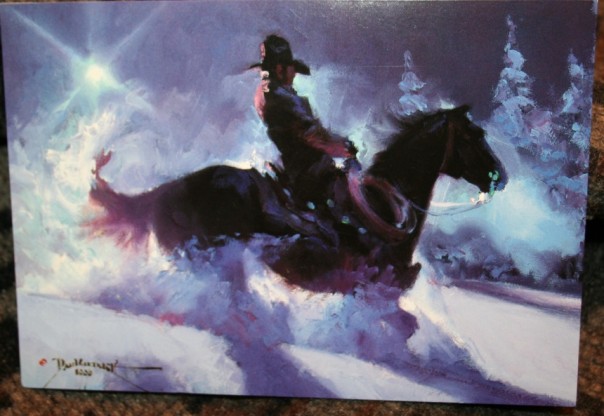
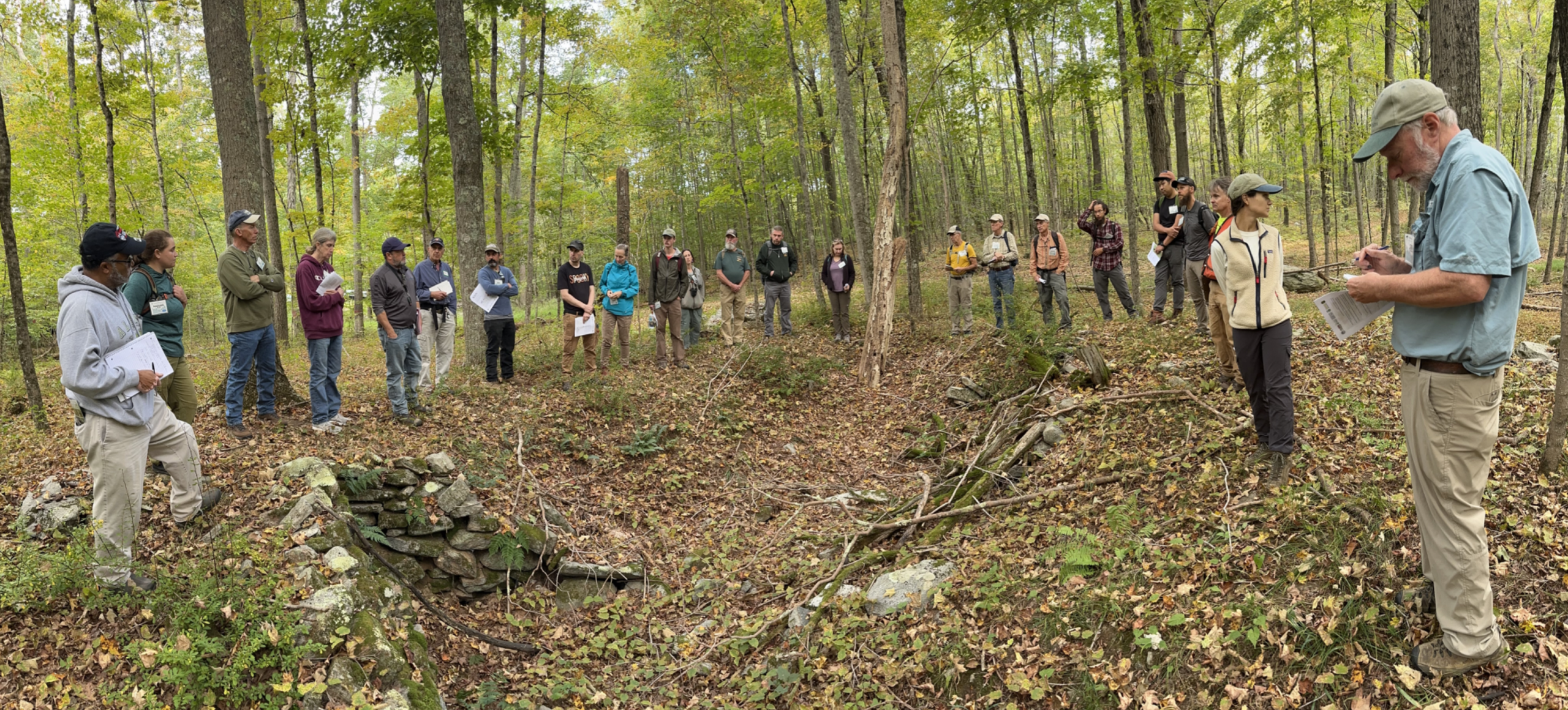
Learn more at a CFPA event for woodlot management.
Plan ahead, learn to speak tree, manage your woodlot. Applications for the 2025-2026 CFPA Connecticut Master Woodland Manager program year have closed–but for those interested there’s time to submit an application for the 2026-2027 year.
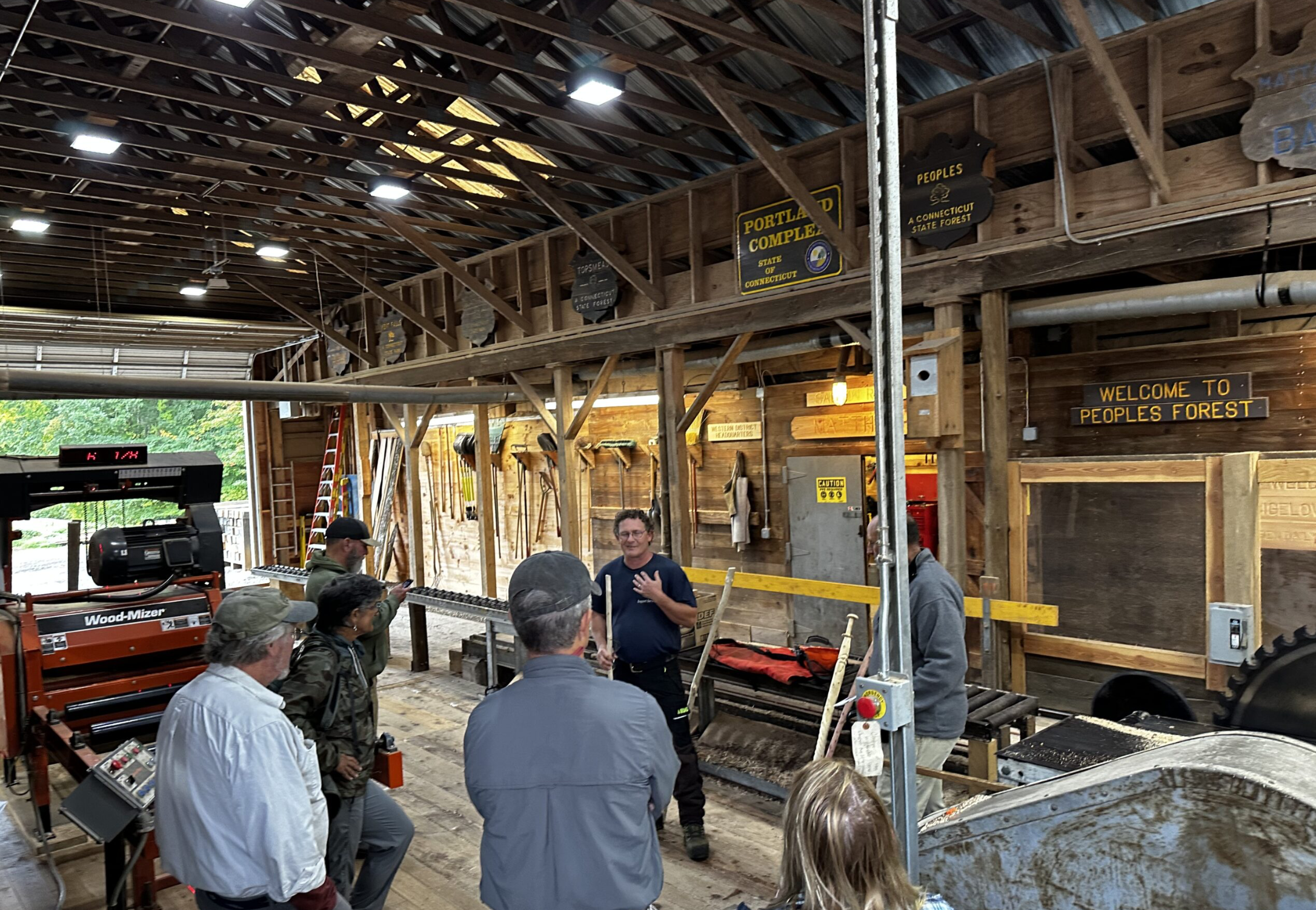
From the CFPA gallery
For more information email education@ctwoodlands.org.
Related, a place only discovered while searching for ice harvesting in Connecticut. How could I have missed this?
“Visit the Ledyard Up-down sawmill to see an operating water-powered sawmill from the mid 19th century. You’ll hear the rasping of the saw echoing across the millpond as it rips through logs, and you’ll feel the building vibrating in rhythm with the reciprocating saw. Volunteers operate the water-powered sawmill to saw local timbers into boards on Saturday afternoons in the spring and fall.
The Ledyard up-down sawmill is unique in the United States. There are only handful of operating sash sawmills in the entire country, but the Ledyard Up-down Sawmill is the last surviving example on its original site with its original saw mechanism and is accessible to the public.
“Unlike the familiar circular sawmill, the Ledyard sawmill uses a straight saw blade about six feet long that is mounted vertically in a wood frame. The movement of the saw is reciprocating—the wood saw frame is connected by a wooden arm (the pitman) to a crank on the flywheel and shaft directly below in the lower level of the mill. As the iron water turbine in the lower mill level rotates, the saw frame moves up and down – the saw cuts on the downstroke and a wooden carriage with the log moves forward on the upstroke. The name for this type of sawmill is sash sawmill, for the similarity of the wood sawframe to a window sash that can be moved up and down.”
(Not open in winter, this is now on a personal “want-to-visit-see” list for warmer weather.)
Dairyman’s Ice King plow
The ice plow is a favorite ice harvesting tool at the Ledyard mill. The Gifford-Wood Company horse-drawn Ice King Plow was a low-cost ice plow manufactured in Hudson, NY from about 1900-1928 and sold for small farm ice harvesting.
“The plow is placed on the market at less than half the price of the company’s regular ones in response to a demand for a first-class fast cutting plow at a low price, for the use of dairymen, butchers and farmers who cut a limited quantity of ice.”
The Ice King was used for both marking a grid and deepening the marked grooves.
The Ice King has a guide for laying out a grid for 22-inch wide ice cakes. The guide fits into the previously cut groove to guide the plow to score a new parallel line; it’s a “swing guide” – the guide is hinged to be flipped over the cutting teeth and used on either the left or right side.
After the entire grid is scored, the guide is removed and individual grooves deepened with multiple passes. “…in four runs a groove is plowed deep enough to break 12 or 14 inch ice.”
The 8-inch Ice King Plow like the one in the Ledyard Up-down Sawmill collection had a catalog price of $25 in 1912.
The Iron Age Jan. 2, 1896, v. 57 (1), p. 119
Gifford-Wood Company. How to harvest ice. 1912, p. 100.
From the online ice harvesting tools exhibit. Ledyard Up-Down Sawmill Sawmill Park 172 Iron St. (Route 214), Ledyard CT. Closed for the winter. Spring 2026 visitor season will be Saturday, 1-4 p.m. in April and May.
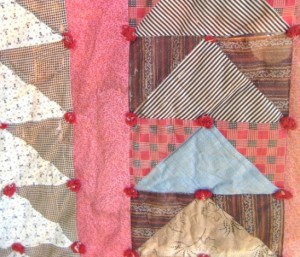
Colorful quilt.
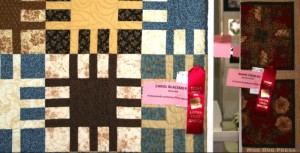
Quilt color, patterns.