
Journey Along CT Freedom Trail; And ‘Buried Along The Road’ Somewhere
Boston Trowtrow. Hello, sir.
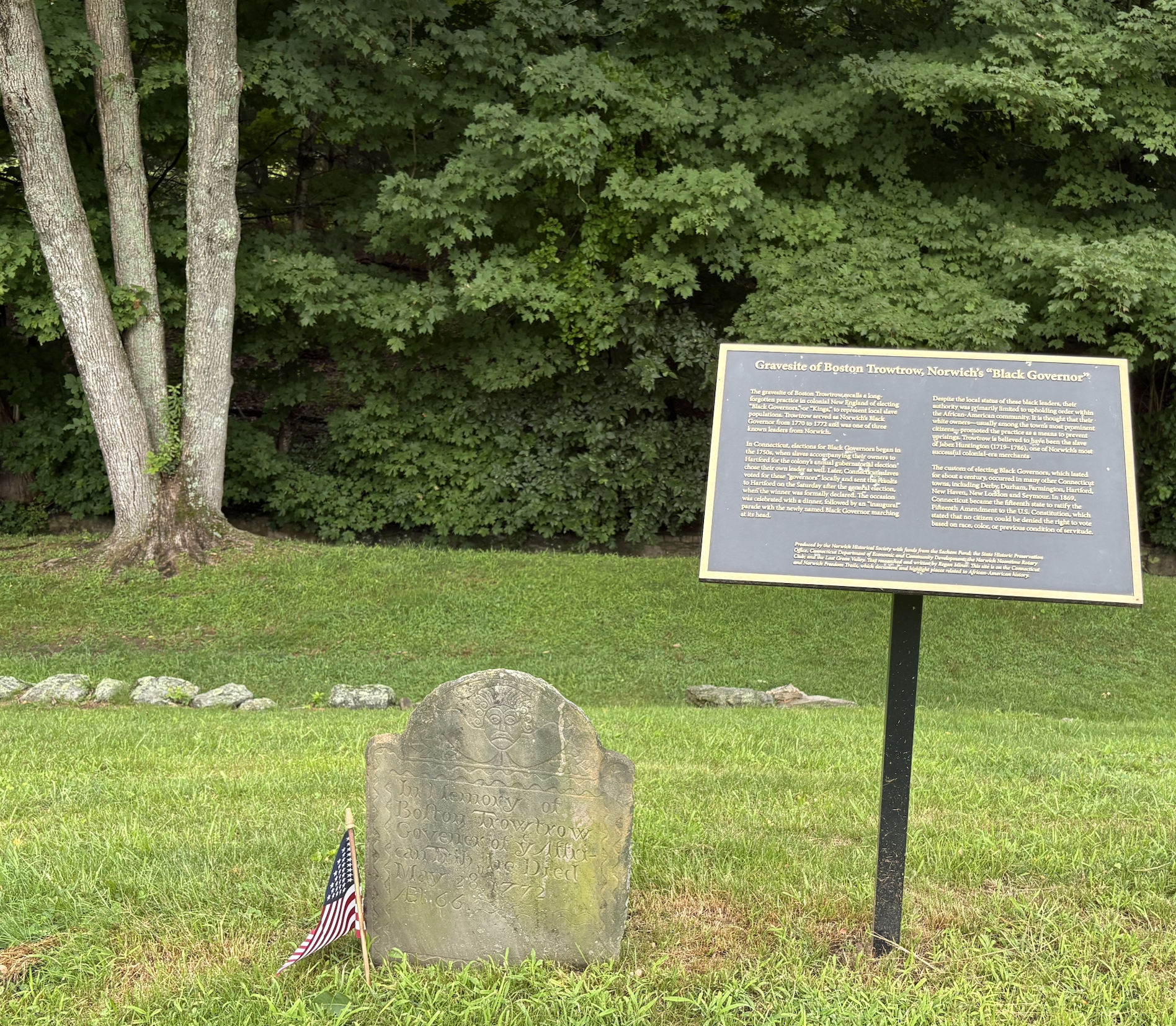
Here he is–Boston Trowtrow, a site on the Connecticut Freedom Trail.
“In Memory of Boston Trowtrow Govener of ye African Tribe he Died May 28 1772 At 66.”
Trowtrow served as Black Governor of Norwich from 1770 to 1772, a role that emerged from African political traditions and became a form of self-determination and resistance within Connecticut’s Black community. The Black Governor elections allowed both enslaved and free Africans to assert their humanity, leadership, and political agency, while also organizing for the abolition of slavery.
The narrow lane that leads to the entrance, gate, signage. (Please preserve that first house–make it a visitor center, a storage for cemetery maintenance–let someone live in it once again.) We are going into the past, a library of lives, stones, artistry, carvings.
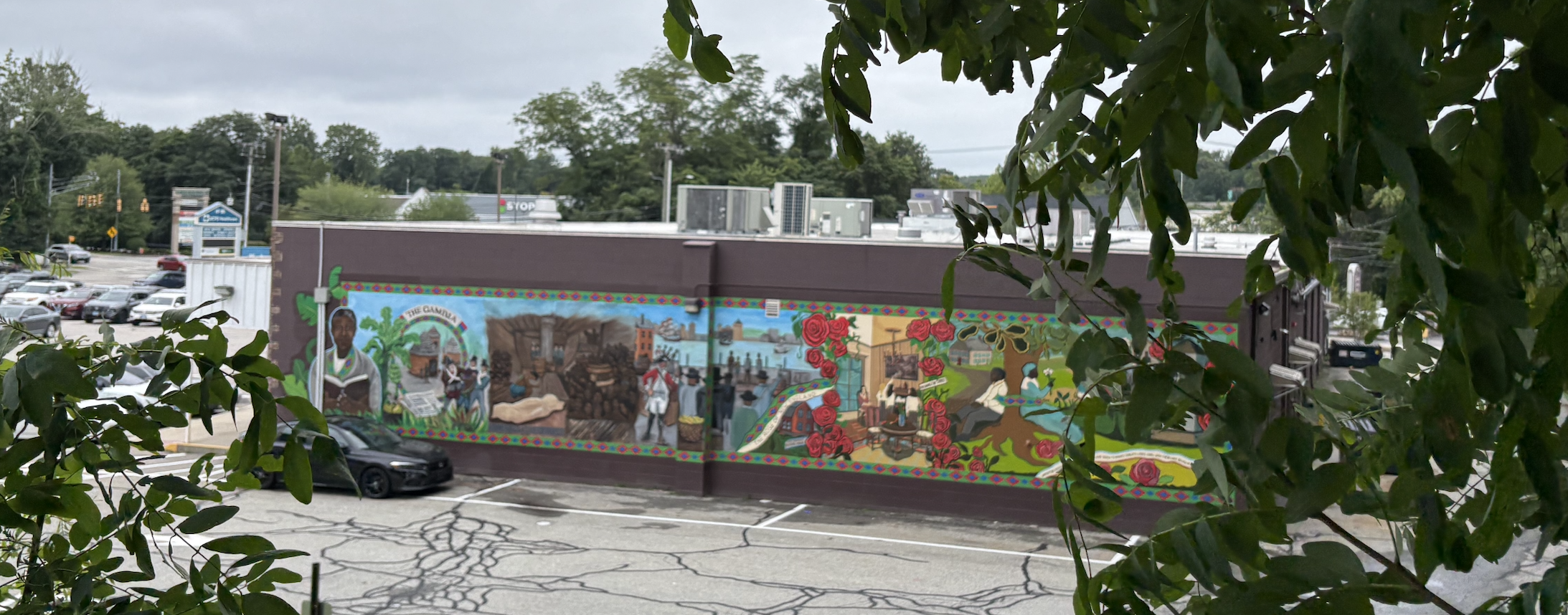
“The mural is a result of a collaboration between the Alex Breanne Corporation and the United Community & Family Services Healthcare, and depicts the story of the Primus family. Facing the African American section of the historic Old Norwichtown Cemetery, where most graves are unmarked, the mural serves as a memorial to Primus, his family, and those buried in the cemetery whose names are lost to time.”
More about the creation of this work of art that tells a story:
The 20 French men who died in Norwichtown are buried “somewhere along the road–Cemetery Road–“–but no one knows exactly where.
Monument details at approximately 2:57 in the video.
This was the source, but it is likely mistaken that the men were soldiers:
“Detachments from the Continental Army frequently passed through Norwich. In 1778, a body of French troops, on the route from Providence to the south, halted there for ten or fifteen days, on account of sickness among them. They had their tents spread upon the plain, while the sick were quartered in the court house. About twenty died and were buried each side of the lane that led into the old burying-yard. No stones were set up, and the ground was soon smoothed over so as to leave no trace of the narrow tenements below.”
But, no.
Research sheds light on this tale and the true identities of these men. Read on.
“The final clue as to the identity of the French buried in Norwichtown is found in a sermon by Rev. Benjamin Lord given on November 21, 1778, in which he enumerated the vital statistics for the year in his parish:
‘Baptisms this year, 40. Deaths, 36. Of those, infants, 5. Children from 2 years, with the youth to 25, are 10. From the age of 25 to 50, are 13. From 50 to 94, are 7. And also died here in a few weeks, of the French prisoners from New-York, 20. In all, 56.’ The Aged Minister’s solemn appeal to God, and serious address to his people. Being the substance of the tenth and eleventh annual discourse, after the half-century, at Norwich, Nov. 21, 1778, with a dedicatory preface. Benjamin Lord, A.M., Senior Pastor of the first church there. Norwich: Printed by John Trumbull, 1783, page 31.
“Thus, the Frenchmen buried in Norwichtown were prisoners of the British in New York, being exchanged for British prisoners held by the French fleet under D’ Estaing. Rather than French soldiers from any particular regiment or other unit, it would appear that they were sailors taken by the British fleet, primarily civilian, as the British navy had been seizing French trading vessels since the onset of war between the two nations in March. I have been unable to find any lists of the exchanged prisoners. It is possible that such exist. Given the paucity of information on the identities of these individuals, it seems most likely that they were primarily civilians in the merchant trade, caught up in the war.”
Dale PlummerNorwich City Historian
Norwich Packet is now the Norwich Bulletin, second oldest published newspaper in the nation; Hartford Courant is the oldest.
Consort: husband still alive. Relict: Widow.
The husband and wife and buried left right as they stood to be married.
Abigail Lathrop, her footstone. Facing east.
Old calendar. New calendar. This all adds to understanding dates that don’t jive, illuminating the past.
Benedict Arnold Trail, this way. Stand where he stood, Norwichtown, CT.
Also see (YouTube): youtu.be/stUHbp9cCko
— Moo Dog Press (@moodogpress.com) August 20, 2026 at 10:16 AM
Hannah, wife of Captain Benedict Arnold, Aug. 15, 1759 at 52. (Her son, is the traitor Benedict Arnold.) A visitor may stand where Benedict Arnold did the day he saw his mother being buried. His siblings who did not survive childhood are buried right there also.
(There’s more than one Benedict Arnold in the family, by the way. But the notorious one is what we’re writing about.)
Huntington House. Huntington tomb. Reworked and restored. The door is now bricked up.
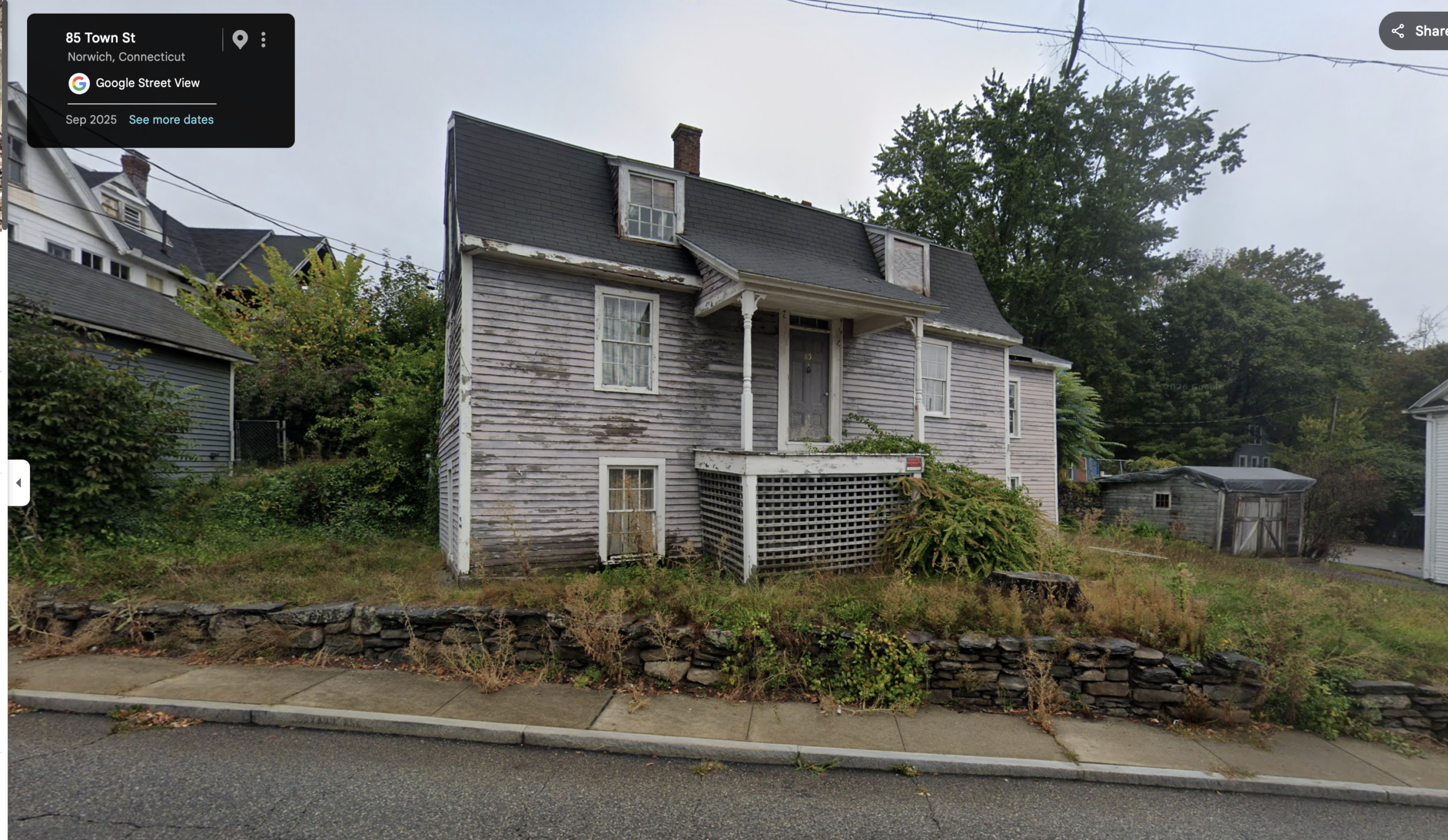
At the corner Old Cemetery Lane, this house (Google Maps street view, connects to map). Built in 1752.
The inscription signage:
The cemetery dates from 1715. One of the first to be interred here was 21 year old Simon Huntington, who died from a rattlesnake bite, probably while haying.
Today, only 1,300 tombstones remain visible. It is thought that perhaps thousands may have been buried here. The headstones bear the names of many Norwich founding families. Among them are 69 individuals who fought in the struggle for independence. Together with these, are buried French soldiers, our allies during the revolution, and the mother of Benedict Arnold, Hannah Waterman Arnold. Other early settlers of Norwich are buried in an older nearby cemetery, but those grave markers too have long since disappeared. Nestled into the hillside, is the red brick tomb and resting place of Samuel Huntington. He was elected president of the Second Continental Congress from 1779 and served until July of 1781. This was the Congress which framed the Declaration of Independence, to which he was a signatory for Connecticut. He was also chief justice of the state and its governor until his death.
—The Historical Marker Database
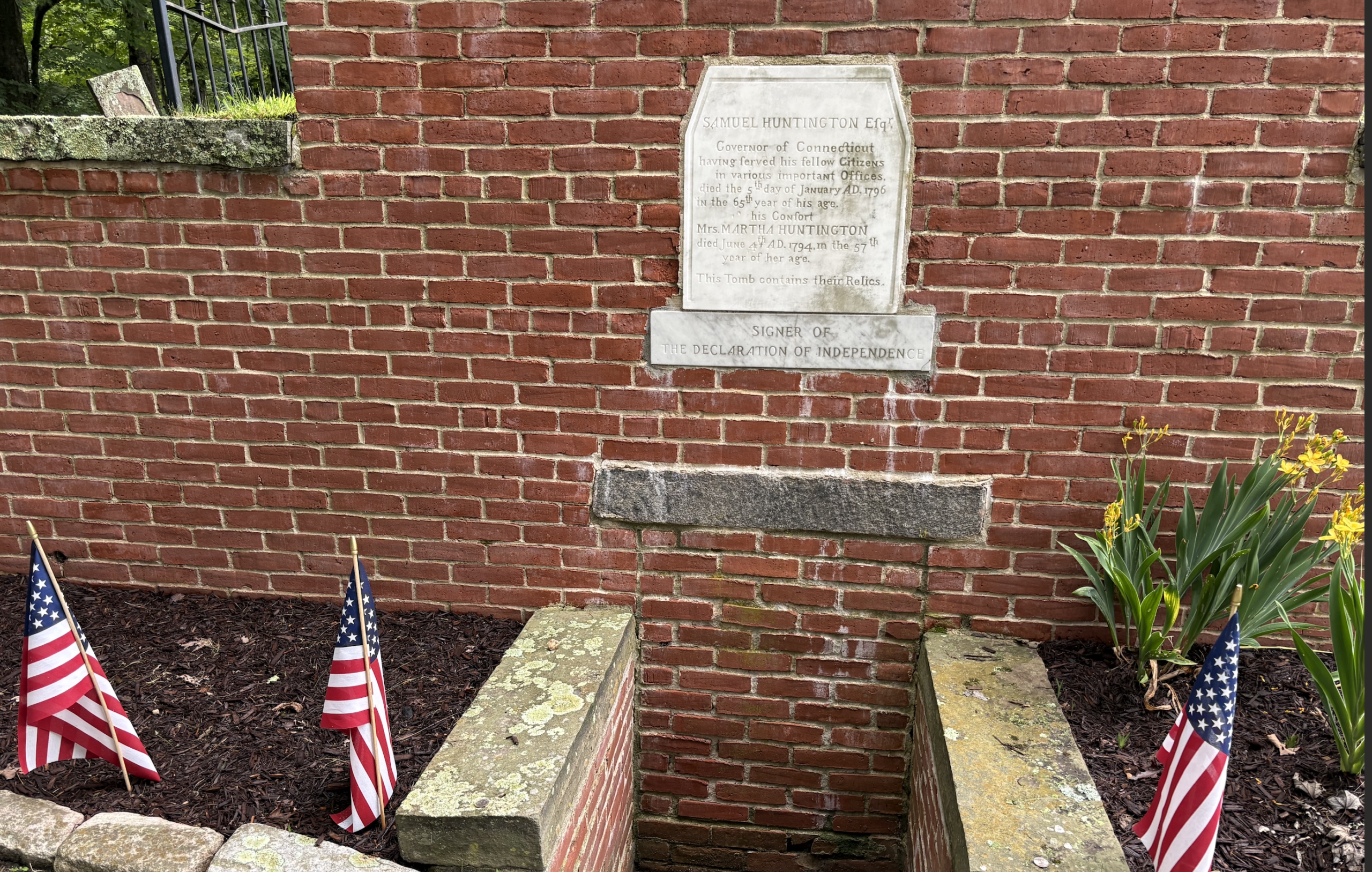
The Huntington Tomb, Norwichtown. Long ago, my young son stood in the corner of the Huntington Homestead before it was restored, as we both listened to plans to bring it back to life.
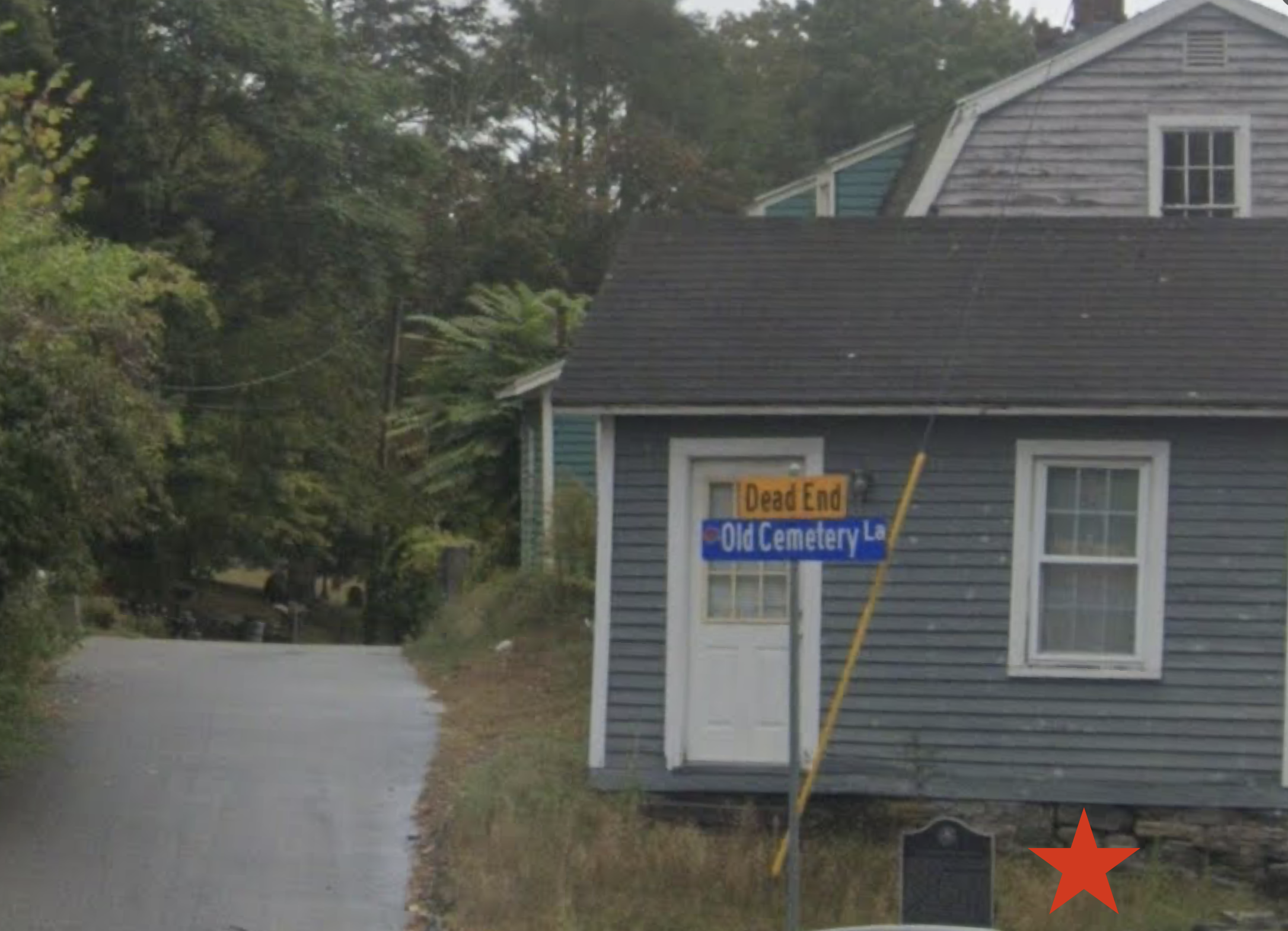
Added that red star–this screenshot from Google Maps and linked back–missed the sign marker during the recent visit. Looked it up.
Now for a few more views of Osbornedale as the annual Eastern States Exposition (The Big E) approaches. Notice the tinge of color in trees near Higby Mountain. The crop of hickory and black walnuts dropping from trees. Harvest at full tilt in gardens.
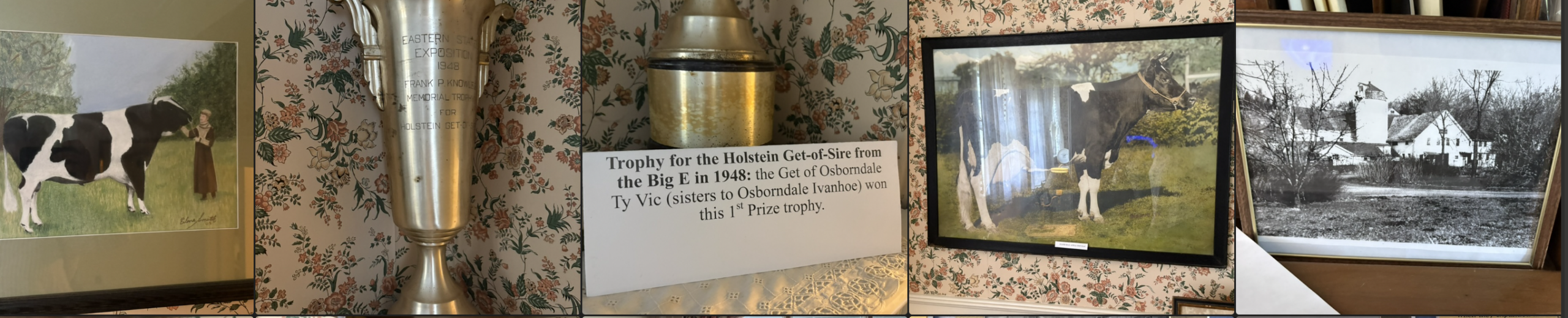
Osbornedale Farm, now known as Osbornedale State Park–exhibit and the New England dairy industr–Holstein Friesian cattle, which won many awards at the Eastern States Exposition (The Big E).

Osborne Homestead Museum, Derby, CT–composite image.
“Frances Eliza Osborne was the last of four children born to the Major and Mrs. Wilbur Fisk Osborne, and the only one to survive childhood. She was born in the house at 500 Hawthorne Avenue in 1876, and lived there until her death in 1956. At age 16, she lost the vision in one eye due to an accident. As a result, she never completed her public school education. At age 31, Frances decided to assume her father’s business responsibilities after his sudden death in 1907. Young Frances Osborne In an era when women were denied leadership opportunities in the business world, she succeeded through pure determination and an excellent business sense. Her achievements included becoming president of Union Fabric Company, vice president of Connecticut Clasp Co., and treasurer of the F. Kelly Company. She was also a founding partner of Steels and Busks Ltd. of Leicester, England.
“Around 1910, Frances Eliza Osborne organized a major renovation of her home. Much of the Colonial Revival remodeling was supervised by architect Henry Killham Murphy. Around this time she met Waldo Stewart Kellogg, a New York architect with a degree from Cornell University. In 1919, they married and together they made Osborndale Farm second to none in the New England dairy industry.” —CT.gov