
On Horseback Or Reading Venture Smith. Ivory Combs, PRP
Editor’s note: This story has been updated; part of it archived.
All progress depends on the unreasonable [hu]man. George Bernard Shaw
June. Wild roses, green everything. Gardens and ideas growing. Time.
One step, one day at a life. Sometimes hold on for a minute and just be.
“Juneteenth is the oldest nationally celebrated commemoration of the ending of slavery in the United States. Dating back to 1865, it was on June 19th that the Union soldiers, led by Major General Gordon Granger, landed at Galveston, Texas with news that the war had ended and that the enslaved were now free. Note that this was two and a half years after President Lincoln’s Emancipation Proclamation – which had become official January 1, 1863. The Emancipation Proclamation had little impact on the Texans due to the minimal number of Union troops to enforce the new Executive Order. However, with the surrender of General Lee in April of 1865, and the arrival of General Granger’s regiment, the forces were finally strong enough to influence and overcome the resistance.” — Juneteenth.com
Juneteenth is celebrated at Hempstead Houses in New London as part of the community’s stories and heritage.
Before 2020, many were unaware of the history and culture behind this event. The humanity.
Our guide, Nicole Thomas, talks about Linwood Bland's involvement with the NAACP New London Branch. @NewLondonLdmrks is working hard to restore this historic home and the site is part of the Connecticut Freedom Trail. https://t.co/FO6xR2CJVv
— Hempsted Houses (@HempstedHouses) June 7, 2020
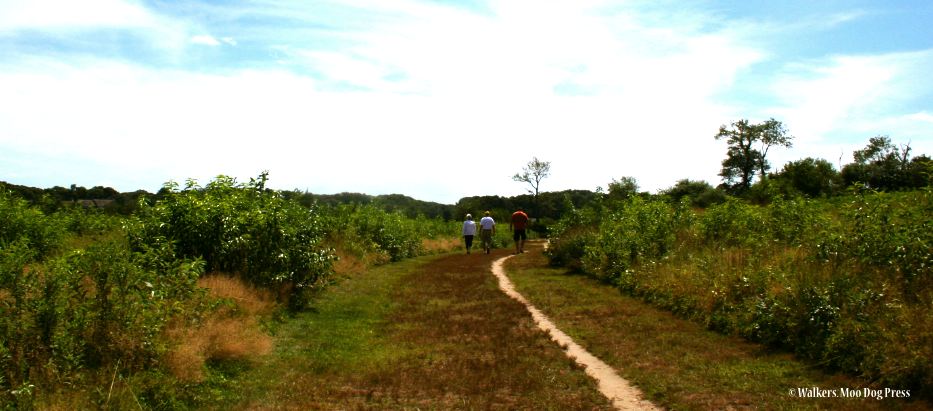
Haley Farm walk. A cove is to the left, out of sight in this image; Long Island Sound is to the south. Miles to walk, a Connecticut state park.
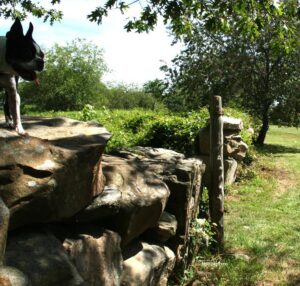
Haley Farm wall and gate with dog.
For those who may missed a story from Saybrook Point:
Before there was a Cornfield Point in Old Saybrook, there was a field of corn. The goal was to feed a small group of people determined to stake a claim to a river bluff in the wilderness centuries ago.
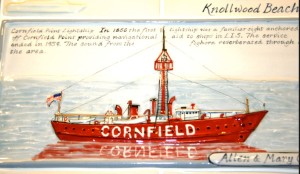
And on we go, still to come is the transformation of a site in Deep River and what it is becoming.
Historic Narrative:
“Built by Pratt Brothers Co. in 1856 for the manufacture of ivory combs, it became a facility of Pratt Read and Co., the merger formed by Julius Pratt and Co., George Read and Co., and Pratt Brothers Co. in 1863. After the construction of the 1881 factory on Main Street in Deep River, this location was identified as the ‘West’ factory/mill of Pratt Read and Co., where ivory was cut and bleached for combs, keys, collar buttons and various notions. After Pratt Read and Co. merged with Comstock Cheney and Co. in 1936, Leonard Young moved his Electric Soldering Iron Co. to this location. Young had started the firm in New York in 1928 to produce soldering irons, tips and pots, and held several patents. Young also invented the ‘Health Ray’ lamp, a tanning device, establishing the Health Ray Manufacturing Co. c.1930 in New York; he moved production to the Deep River plant in 1937. The lamp, whose rays were purportedly four times stronger than mid-day summer sun, was sold by mail order only; users were cautioned against lengthy exposure. Between the two companies Young employed 35 people in 1937. From 1962 to 1987, the Electric Soldering Iron Co. was owned and operated by William A. Purtell Jr (1922-2004), son of Senator William A. Purtell, and in 1987, under new ownership it was renamed ESICO. Production of soldering equipment for use in the aerospace, automotive, branding, electrical, electronics, HVAC, hobbyist, marine, plumbing and roofing industries continued under ESICO-Triton International Inc.”
Architectural Description:
The 1856 wood frame factory building is one and a half stories with gable roof. One to two bleach houses, with southwestern facing glass elevations, were located to the north of the factory until c.1925. An ivory vault was located to the west on the other side of the head race until c.1936. The eastern engine shop and boiler house were built in 1911. According to town historian Rich Kalapos, as of 2016 the turn of the century turbine, rope-pulled elevator, and some machinery remain in place.
And to the present, reborn as Pandemonium Thrift and Rescue Project Sanctuary. (Note: Their Twitter page is not as active as walking into the shop and looking around, then touring out back where the animals and birds and rescues will be housed and cared for. Round up with every purchase to help feed and care for all. It is an incredible place with worthy goals. Nevermind the history of the site which is tremendous. Then linking all in a trail with a vault museum to tell the stories here? Wow.)
Two of our rescues posing for the camera. pic.twitter.com/kqnh9MRLP4
— pandemonium rainforest project (@pandemoniumrai1) November 16, 2019
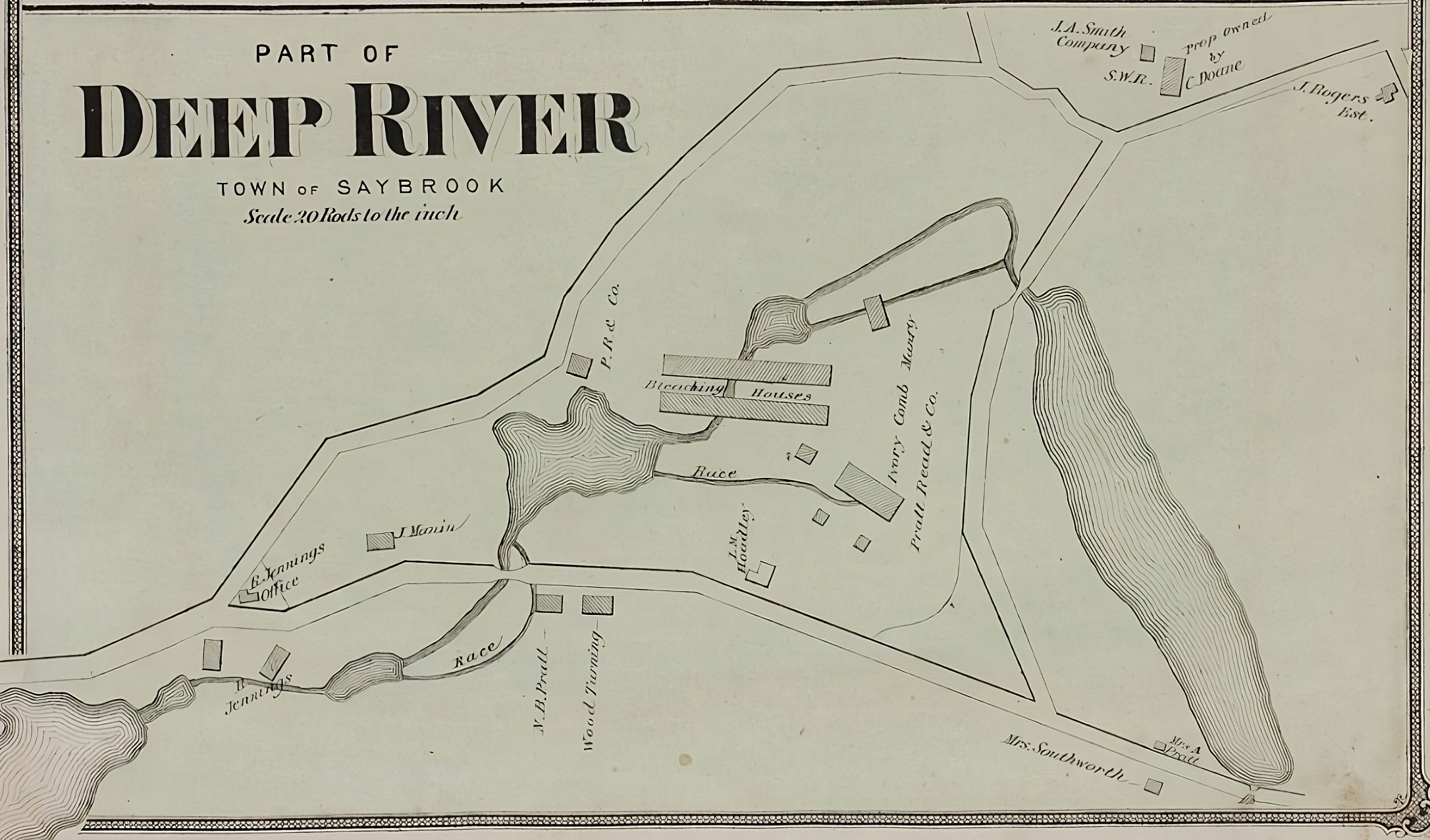
“The FW Beers County Atlas of Middlesex, Connecticut, inset of the West Factory. This is one of the best visual indications of how much Route 9 changed the area. The bridge on the right side of the mill is where we have cleared down to, near the fire pit.” — Ian Basilone, PRP manager and historian, who shared his knowledge and this image, one of many in his collection for an upcoming feature story about both the building and connections to Africa, elephants, trade, slavery; but also about the vision of what the acreage and building are becoming for housing rescues and providing animal care, home to a community connecting to all with a big heart.
Fun day, Connecticut Gymkhana Association at Lock, Stock & Barrel arena.#BethanyCT pic.twitter.com/f12V6Bmxee
— Moo Dog Press (@MooDogPress) June 4, 2023
Well-behaved pups. pic.twitter.com/AQIOVooq5k
— Moo Dog Press (@MooDogPress) June 4, 2023
Editor’s note: This story has been updated. Portions moved forward from stories written during before and during the pandemic.