Highland Country Club, International Silver Company, Eric Sloane
“Write what should not be forgotten.” –Isabel Allende
At a recent gathering at the dam removal site, Highland Pond Preserve, threads of stories wove together like water flowing freely.
Along the way, going to Middlesex Land Trust event to meet Sally Harold. Highland Pond to celebrate World Fish Migration Day.
— Moo Dog Press (@moodogpress.com) April 18, 2026 at 1:52 PM
Thank you Sally Harold of RiverWorks LLC for the voicemail message and subsequent conversation by phone for stirring up a renewed quest for Highland Country Club local history. Unearthing that blue folder, opening it up to refresh memories and view images from a story done for the Record Journal about the clubhouse, golf course, interviews, walking the course contours. Conversations, interviews.

Walked the layout of Highland Country Club golf course with the late Tex Kane. This is the course from the invaluable book by Mark Jette.
Where posh business guests (International Silver stockholders) from New York once visited by private railroad car to get business done, after meetings and lunch at the Home Club (downtown, also gone now), they’d be feted at the former Highland Country Club (HCC) in Westfield, CT. Golf, a gala evening dinner. Liquor and seafood, socializing.
Layers of time. While the first HCC structure burned, despite water used from Highland “Lake” at the time–another grander country club was built. (More about that in another story.) The water still flows for Sawmill Brook, but the dam for Highland Lake/Highland Pond has been removed (owners of that site, Middlesex Land Trust) at the Highland Pond Preserve. (A wooden pipe was discovered in the dismantling of the dam, per Sally Harold. (Want to see, hear any other stories of found objects.)
Today the HCC site is occupied by sizable private homes (HCC) and the golf course is hushed under pines as the Wilcox Woods Conservation Area. You have to look to find the contours, bunkers–they are still there. The former trolley route from Meriden to Middletown, berm. The Westfield station.

History and the late Col. MCoid remembered. A postcard of Highland Station. His collection? At the University of Connecticut.
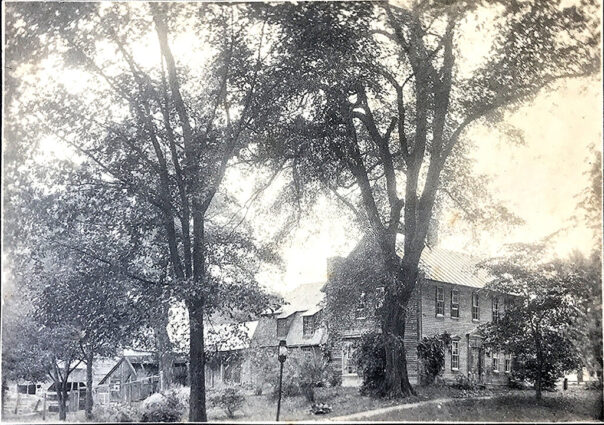
“The club house was built originally for a summer hotel, back in 1883. The venture did not prove a success and the building was idle for a number of years. Eventually it was taken over by the Meriden Golf Club, which expended about $20,000 putting it into shape, the original cost of the structure having been $30.000. When the Highland Country Club was organized, as a sort of offshoot of the Meriden Golf Club, the building was leased to the new body in 1910, and since that time about $12,000 more has been put out on changes and improvements. The insurance is about $35,000, and the club plans to rebuild.”
–The American Golfer edited by Walter J. Travis, Nov. 1914
“The Highland Historic District is a U.S. historic district in Middletown, Connecticut. Centered at the junction of Atkins Street and Country Club Road, the district encompasses a collection of well-preserved 18th and 19th-century architecture, including some of Middletown’s oldest surviving buildings. The district was listed on the National Register of Historic Places in 1982.” — Wikipedia
“The early residents of Highland supplemented their farming by crafts and other activities. Phineas Bacon (#10) was a tanner and a shoemaker, and also kept a tavern. John Warner (#6) also was a shoemaker, and owned an interest in a sawmill and a great number of farming implements as well. Jedidiah Wilcox (#7) hauled goods overland from New Haven to Boston with his teams when the War of 1812 closed off the coastal shipping. Later in the 19th century, Asa Roberts and his son Darius, who lived in the adjacent houses south of the intersection (#8 and 9)» carried on a suspender and corset shop on the premises. They also kept bees and were farmers as well. Nineteenth-century maps show two blacksmith shops, a sawmill, and a shop which made tinsmith’s tools, all within the bounds of the present district. The two ponds and ruined dam today remain to suggest the small-scale industry which was part of the people’s lives in that locale.” Bruce Clouette, consultant, Connecticut Historical Commission Jan. 30, 1980.

A page from Mark Jette’s book “Century of Golf in Meriden 1898 -1999”– Trolley Station and Highland Lake depicted here. An excerpt by me (Chris Brunson) featured on pages 46-47. Thank you. There’s a feature story clip from the Record-Journal in my own archives about Highland Country Club history, images. More about that to come.
THE HIGHLAND COUNTRY CLUB OF MERIDEN: The First Twenty Years. “There is no more delightful situation than the Highland for such a club. It faces Mount Higby to the south overlooking Highland Lake and to the north there is a view of forty miles through beautiful valleys to Mount Tom and Mount Holyoke. By trolley the club will be only 15 minutes from Meriden to Highland Station with a four-minute walk to the clubhouse.” Daily Journal – Aug. 6, 1909 (from Mark Jette’s book, see excerpted page detail this page.)
The dam for Highland Lake/Highland Pond has been removed (owners of that site, Middlesex Land Trust).
“The transformation of Highland Pond Preserve is a powerful demonstration of restoration in action—reviving a stream, renewing habitat, and allowing Sawmill Brook to once again flow freely through a thriving natural landscape.
“This project was made possible through generous support from the National Fish and Wildlife Foundation Long Island Sound Futures Fund and the Connecticut Port Authority. The Middlesex Land Trust extends its sincere thanks to our project partners–RiverWork, LLC; SumCo Eco-Contracting, LLC; and Biohabitats, Inc.–for their expertise and dedication throughout planning, design, and construction. Their collective effort helped make the vision for a restored Sawmill Brook a reality.
Nearby is Chauncey Peak–nd the international business of silver connects both sites.

Eric Sloane’s wall-sized rendition of an ancient rift valley as seen from a bird’s-eye view above Chauncey Peak, the rock outcrop at right. Trails lead up from what is now known as Giuffrida Park.
Where is this fantastic floor-to-ceiling mural of a rock crag and expansive valley landscape below? Views as if you were a bird soaring above Chauncey Park in Meriden, Connecticut, by Eric Sloane? Inside (now you have to be buzzed in, the front doors are secured) the former world headquarters of the International Silver Company facing (set back from) Broad Street.
What connects Eric Sloane, Highland Country Club? International Silver Company. Roy Wilcox is interwoven to this history of land, time, golf, views, business. So is Col. McCoid.
There. Go see for yourself.
Back to that astounding aerial view and an artist, author, weather watcher of a human being–Eric Sloane (birth name Everard Jean Hinrichs), who created an amazing life with notable accomplishments in diverse fields, including writing books, creating art, studying weather, how old barns and early houses were sited to weather conditions and much more. Yes, even helping preserve The Grange, Alexander Hamilton’s home. Painting a masterwork, his view of Chauncey Peak in Meriden, Connecticut – created when many never even knew the rocky promontory existed.
The sweeping views that can be seen from the mountain top known as Chauncey Peak include the distinctive Hanging Hills of Meriden to the west, a patchwork of human development squares seen below with a minuscule white church steeple.
Sloane chose a bird’s-eye-view above the rocky peak to immortalize inside the (then) corporate headquarters of International Silver Company. From all the possible landmarks, vantage points and manmade accomplishments, Sloane picked this one-of-a-kind natural formation above an ancient rift valley formed by volcanic forces millions of years ago – as his subject.
Wondering now if Meriden Historical has the archives of International Silver Company–and if the Eric Sloane commission/payment is in there?
Meriden, Connecticut, was then known around the globe as “The Silver City” – and Sloane included those three words in his painting.

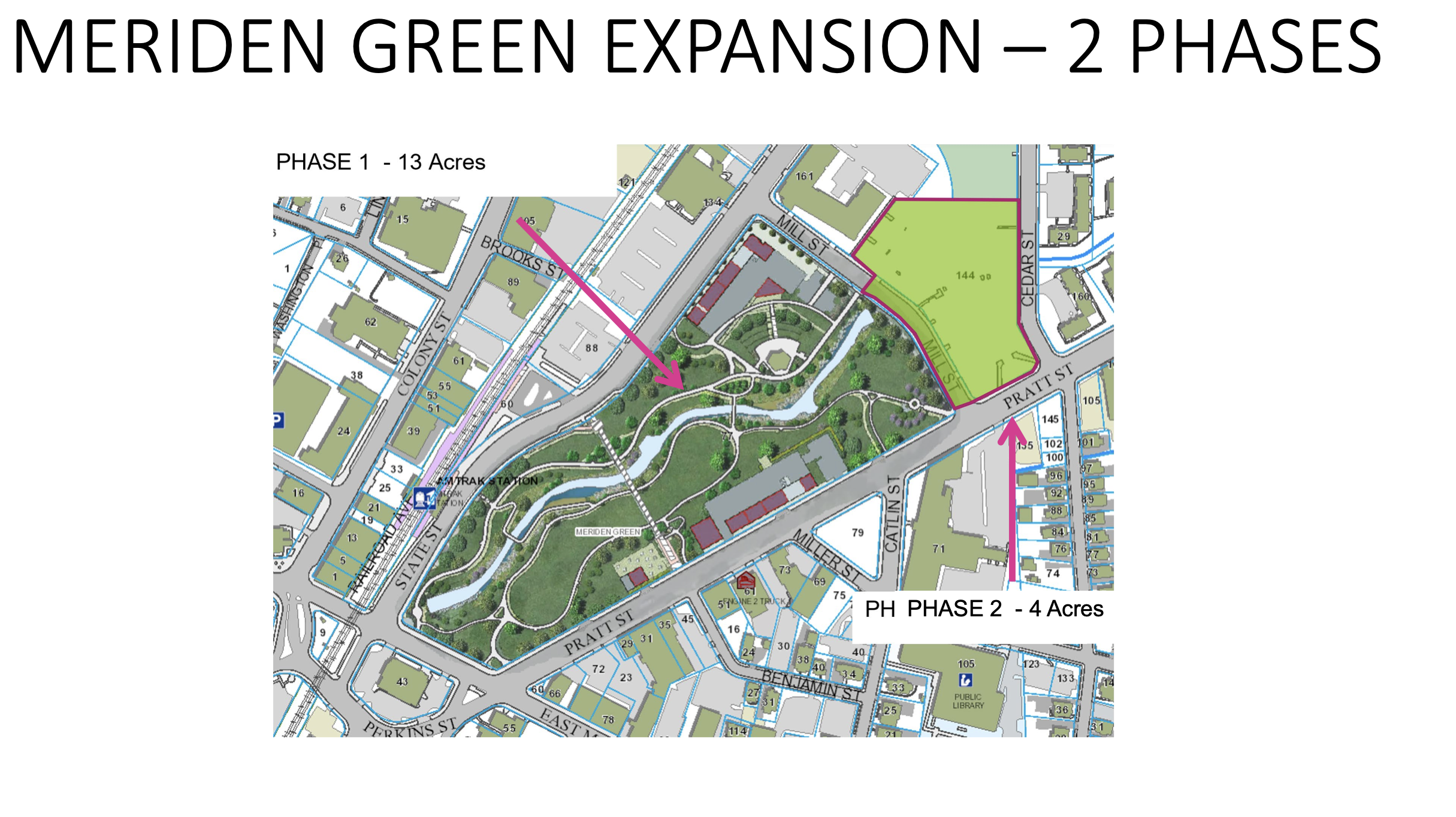
The farmhouse (still there but updated) and the barn and outbuildings below as seen in 1978. The old traffic tower, now restored and back downtown in Meriden, was also here once upon a time–forlorn and pocked with bullet holes, it was on its side right about where the park’s parking lot is now.
Who cares? Raises hand. Well. Let’s provide some world-view context.