
Historic Contributions Made By Immigrants–Local, And For Our Country
Sometimes words read must be shared.
From the June 28, 2026 emailed “What’s Up At the Custom House” newsletter:
“The Custom House will be closed for the 4th, but we will be out in force the following Saturday for CELEBRATE NEW LONDON July 11. We’re having a sidewalk sale with items from the Shop, used books, & vintage items.
“A couple of months ago, NLMS librarian Laurie Deredita wrote an article we’ve published in the newsletter. We’re also sharing it here, below.
-S
“Lately there has been so much political controversy over immigration to the United States that it is easy to overlook the historic contribution that immigrants have made to the economic development of our country. To find an example of local benefits from immigration to Southeastern Connecticut, one needs to look no further than the collections of the New London Maritime Society where the Shoreline Rail Road map of New London from circa 1874 is currently on display in the Frank L. McGuire Library.
“This map of the Shore Line Railway and adjoining property in the City of New London shows the layout of the south side (waterfront) of Bank Street running from the railroad bridge over Shaw’s Cove to just beyond the Parade. The map is undated but it was probably drawn about 1874 and it states the names of the owners of the properties on Bank Street that abutted the railway line.
“Most of the surnames of property owners listed on this map of Bank Street are names that are familiar from local history going back to colonial times: Bishop, Frink, Starr, Deshon, Harris, etc. However, some of the others are the names of people who came from far away to settle in New London to make a life for themselves here and, in the process, to contribute to the economy of their chosen land.
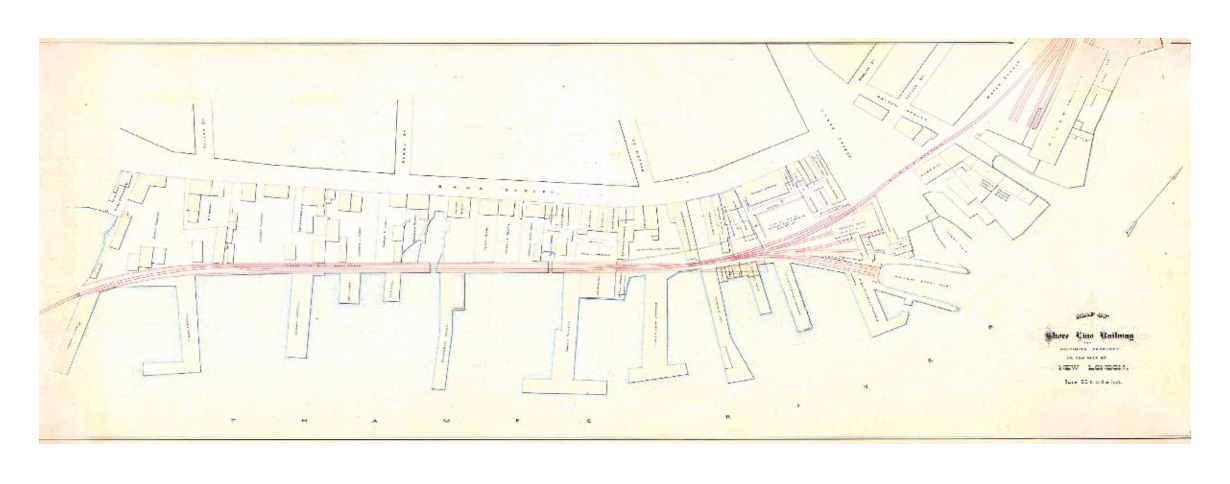
“Looking at our map, the first name that stands out is that of Joseph Lawrence (1788-1872), who was born Giuseppe Lorenzo in Venice, Italy. After relocating from Savannah, Georgia, he arrived in New London in 1819 where he married a local woman, Nancy Woodward Brown. Lawrence was an extremely successful and wealthy whaling agent and banker in New London. By the time our 1874 map was drawn, Joseph Lawrence was dead but his estate held property (land, buildings and a large wharf) in this area at the foot of Golden Street. His wealth passed to his sons and to many local institutions, such as the hospital, of which the Lawrence family was a founder and generous benefactor. It can be said that we are still benefiting in 2026 from the labors of immigrant Joseph Lawrence and his family. He is buried in Cedar Grove Cemetery.
“Charles F. Stoll (1837-1901) is another name on our map. He was born Karl Friedrich Stoll in Baden-Wurttemberg. According to the 1876 directory he operated a granite works and marble yard at 72 Bank and also resided there. This site is now the location of the Vessel Technologies building at 174 Bank Street. He is buried in Cedar Grove Cemetery.
“Herman Pobig was a tailor who was born in Prussia in 1833. The 1876 directory lists him and his wife at 56 Bank Street where they maintained a home and business. He was “one of earliest German immigrants in New London” but he returned to Europe in 1910.
“Henry M. Stayner (1808-1890) was a cabinet maker, born in Halifax, Nova Scotia. In the 1880 federal census he is listed as a retired undertaker. His residence was on Broad Street at the corner of Hempstead, and he is buried in Cedar Grove Cemetery.
“Last on my list of immigrants is the name of “Margaret G. Bulkley” who may possibly be Margaret Donegan Buckley or Bulkley (1813-1901), the wife of Patrick Buckley, of Buckley and Casey (Marble and Granite workers), a business that was located at 84 Bank Street. A notice appeared in The Day in 1884, announcing the dissolution of the firm by mutual consent, but that the business would continue under the old name, signed M.D. Buckley. She was born in Ireland and is buried in Saint Mary Cemetery with her husband and two sons.
“All of the immigrants mentioned above contributed to the prosperity of their adopted country and left their mark on the development of New London.”
–Laurie M. Deredita
Librarian, Frank L. McGuire Library
Editor’s note: Shared with permission.
New London Maritime Society is a New London-based 501(c)(3) non-profit organization. The Custom House Maritime Museum is on Bank Street and is a fantastic destination. Admission $10; ages to 16, $6. Families, $25. Free for NLMS members, New London residents (with local ID), USCG cadets, active-duty military and their families, visitors with SNAP EBT card. If you require accommodations due to a disability please email to discuss your needs. The request should be provided with enough time to reasonably set up the accommodation.
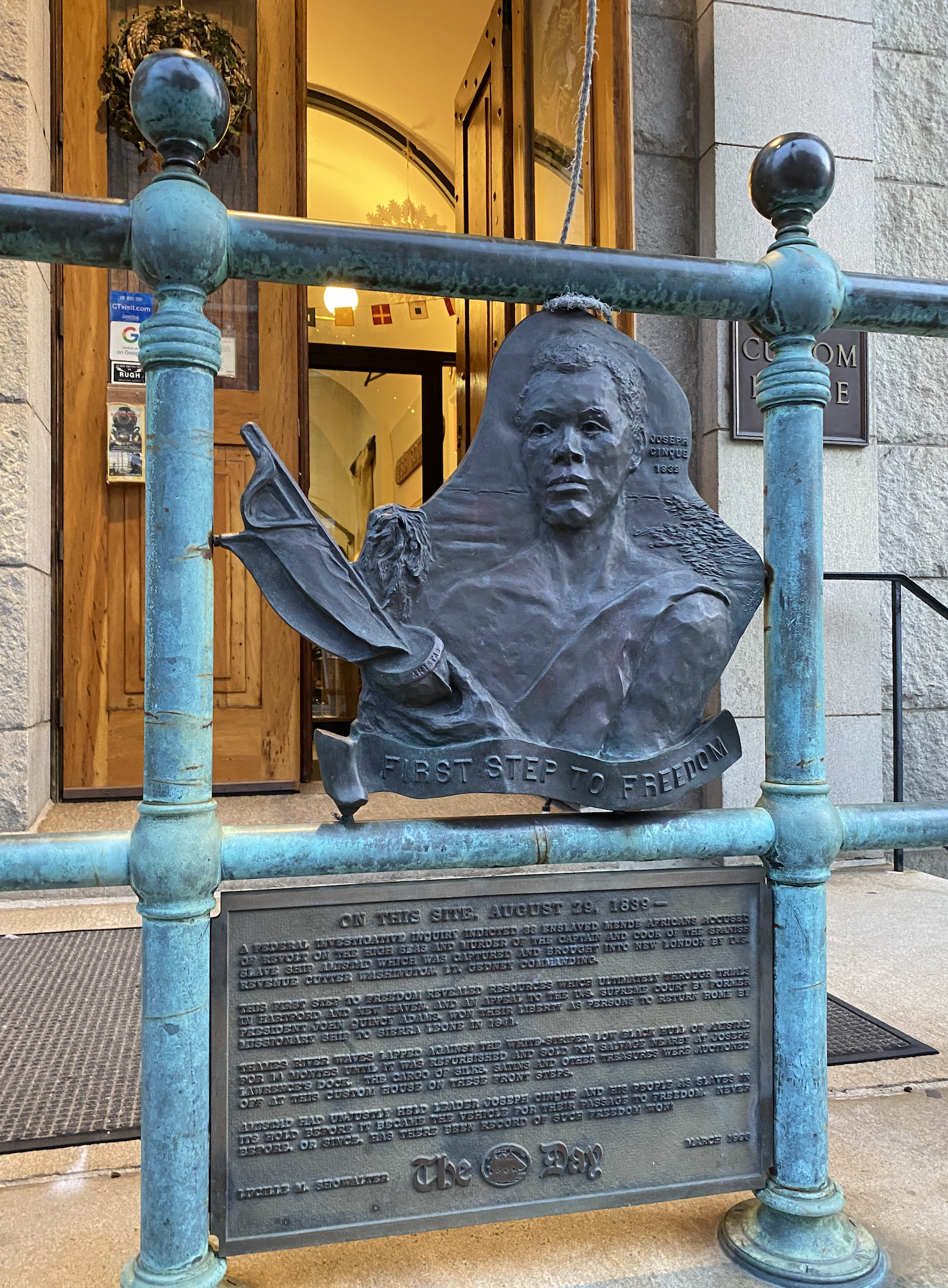
Stopped on my way out to read this–The Amistad’s history is here.
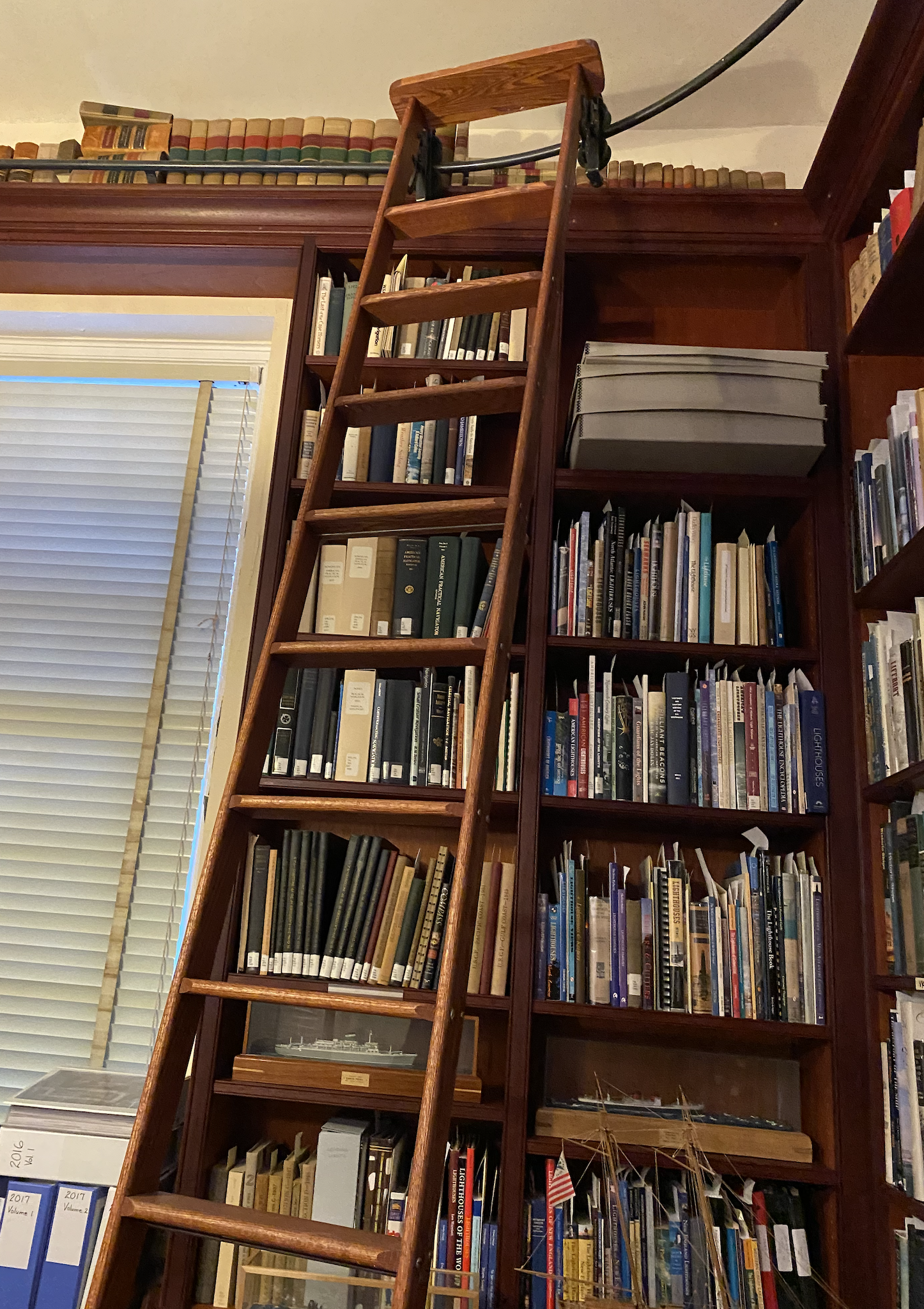
A view from a visit/tour, Jan. 11, 2023.
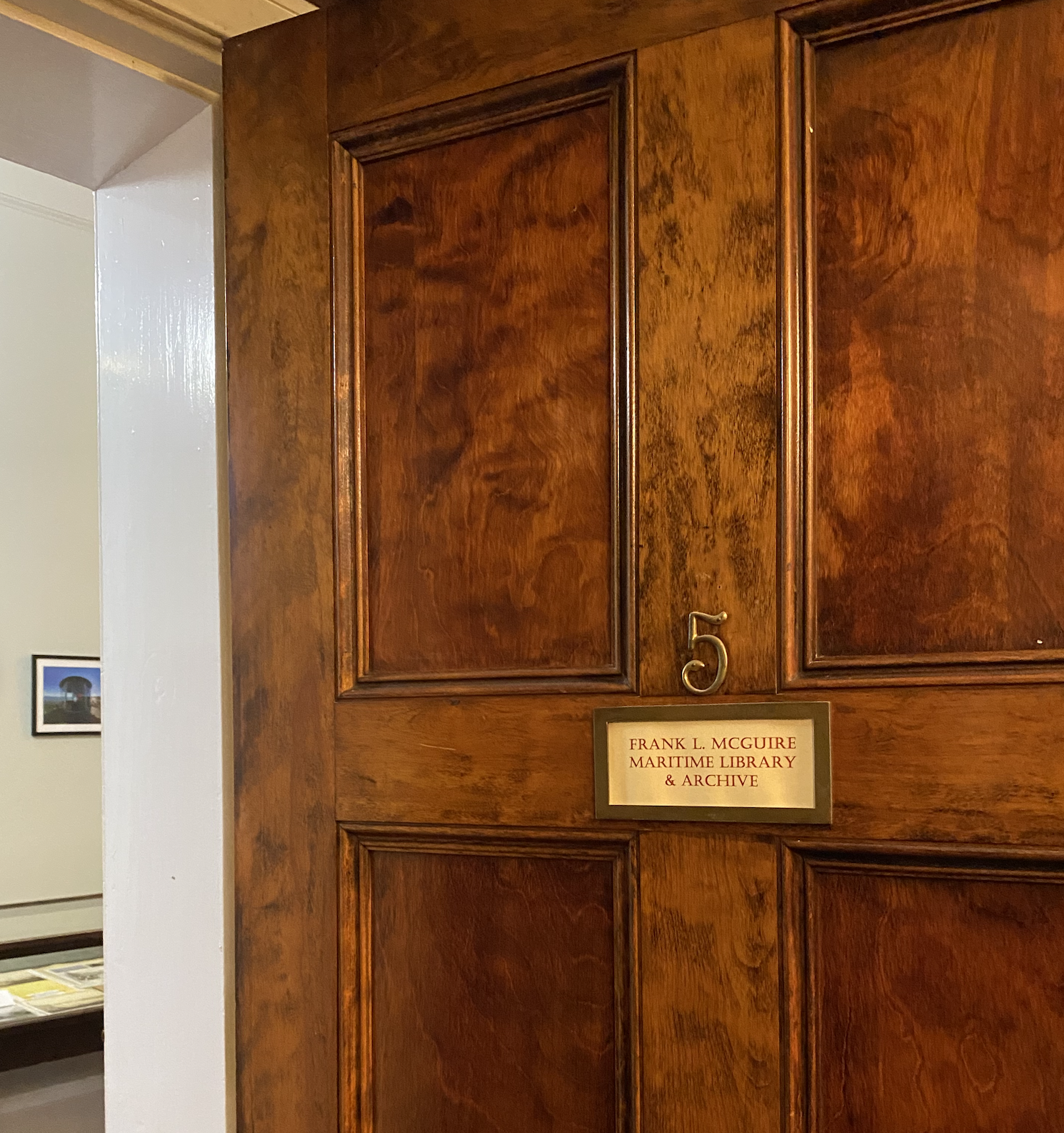
Enter, a wealth of knowledge, maritime history, stories of people.
“Check out the Custom House, now the Custom House Maritime Museum, and their exhibit entitled Amistad: A True Story of Freedom. Also remember to visit the bronze plaque on the building’s exterior that memorializes the Amistad captives and New London’s role in their freedom.”
—NPS
From FB Explore New London:
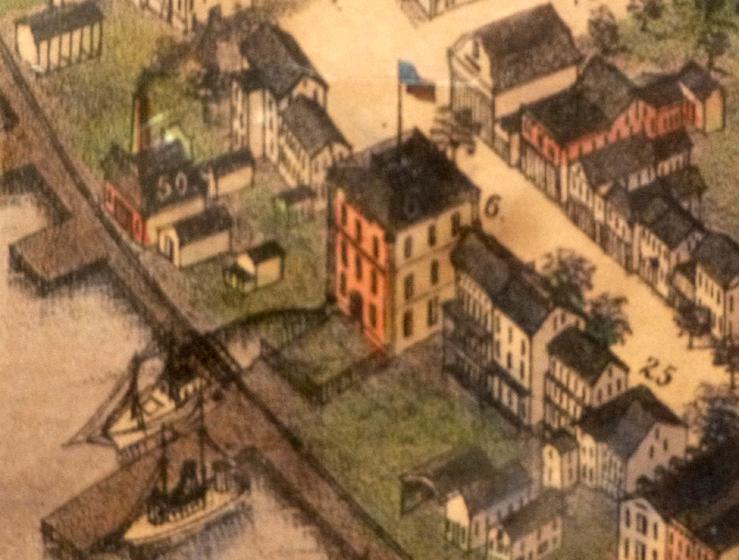
Custom House Maritime Museum detail. New London, CT, Bank Street. Connects to official site.
If you are humming now or singing of The Wellerman, think of the voices here–none the same–all of us can contribute (signed, proud grandchild of immigrants).
And this livestream still is connected to the site to watch the Thames River and maritime life.
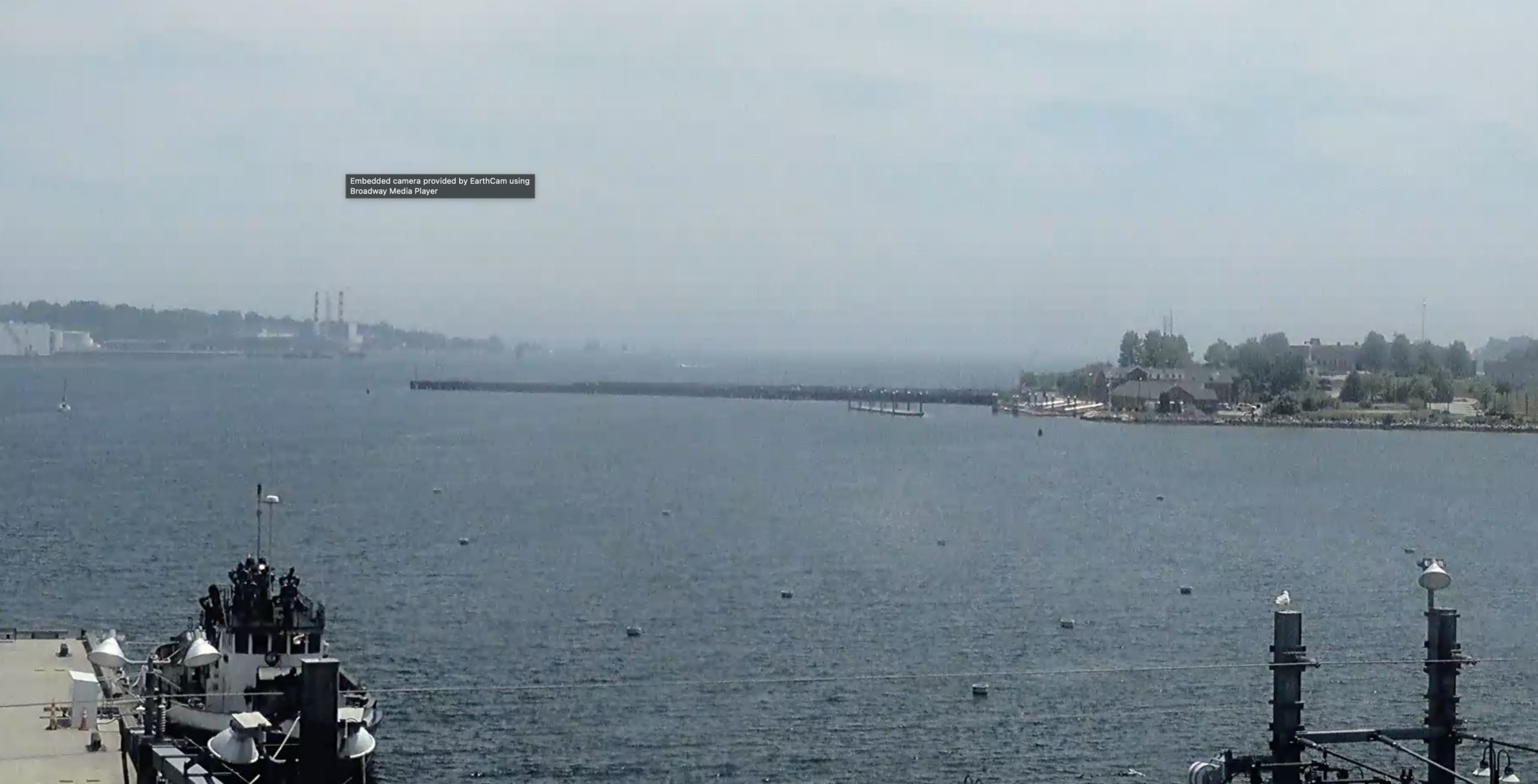
A still from NL HarborCam via EarthCam–travel the link to Custom House Maritime Museum’s official site to watch live.
“Built when the city was the world’s 2nd leading whaling port, New London’s Custom House has kept watch on the harbor since 1833. The Amistad arrived here in 1839. Electric Boat, which developed some of our earliest submarines, launched the first nuclear-powered sub, the Nautilus, in 1954.
“From the roof of the Custom House Maritime Museum, today’s harbor landmarks include three lighthouses, a 19-century fort, a US Coast Guard station, and an active submarine factory. There are ferries, tugs, tankers, submarines, tall ships, fishing boats, and dinghies. You might spot the USCG barque Eagle moored at Fort Trumbull — NL is her home port. Summer brings weekly waterfront events, among these SailFest in July (with spectacular fireworks), and the CT Maritime Heritage Festival in September.
“Now, with our New London Harborcam, everyone who loves the waterfront can keep watch on the scene. You never know what you’ll discover. And when you’re in town, be sure to stop by the Custom House Maritime Museum to learn more about our local maritime history and New London’s harbor sites.”